
Quick takeaways
- Strongest defence against identity theft is credit freeze which can be done for free,it can be done on all three credit bureaus Experian, TransUnion, and Equifax.
- Order matters the most in case of any theft ,first freeze the affected account then freeze your credit and then file a report at IdentityTheft.gov.
- SIM swapping and data broker exposure are new attack methods other than phishing and skimming.
- Children, military families, and elderly relatives need separate attention.
- Identity theft insurance covers legal fees and lost wages. It does not cover stolen money.
In 2024, American citizens lost more than $12.5 billion to fraud and over 1.1 million identity theft reports were received to FTC through IdentityTheft.gov (FTC Consumer Sentinel data, reported March 2025). One fine day you go online to look at your bank account and you see a transaction made on your debit or credit card that you do not recognize or you receive an alert about an unknown credit card being used on your name. In this time frame from finding out to determining whether there has been a theft and if there is one in process, the thief has had enough time to make use of stolen information and possibly create further problems for you.
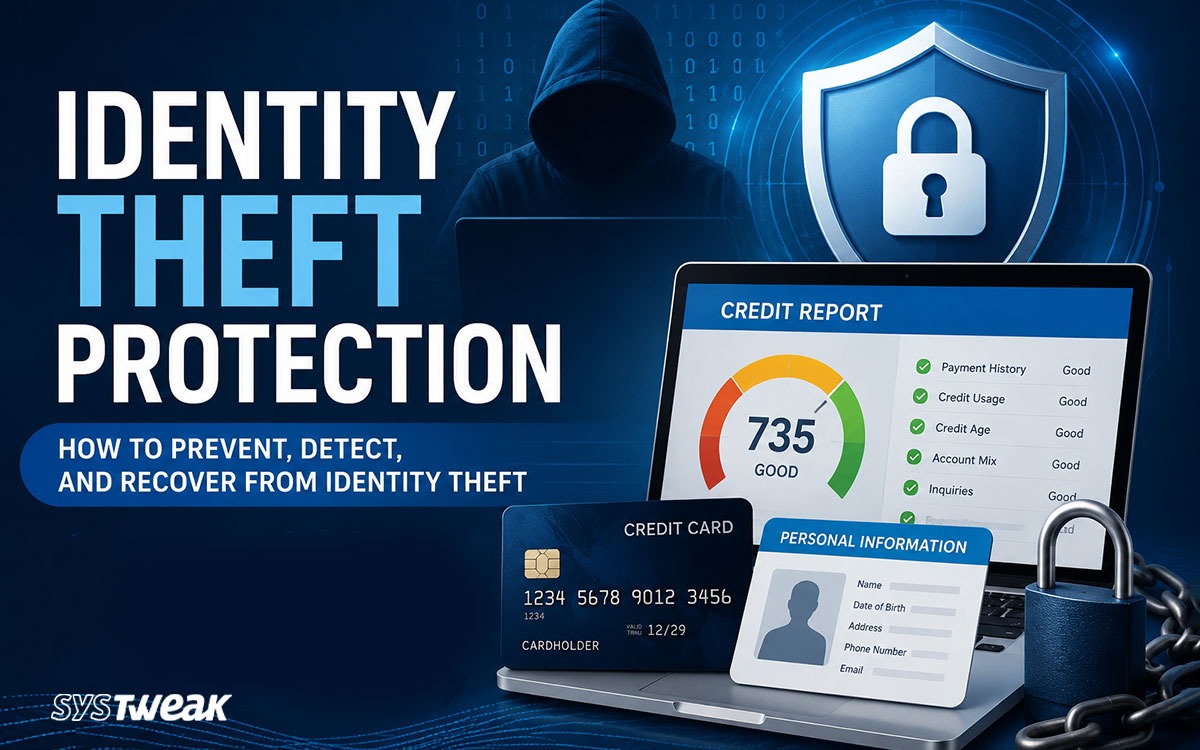
This article covers all aspects of identity theft protection and its various types, early warning Signs to identify potential theft activity, what to look for to identify potential theft activity and step by step action plan to follow once you feel that your identity has been compromised.
What are Various Forms of Identity Thefts that Occurs in Day to Day Life
Identity theft occurs when someone else uses your personal, financial, or other information to take action that you have not authorized. Identity theft is not just one type of crime. Depending upon the type of identity theft committed, the characteristics of each type will differ in terms of what you should be looking for and recovering from.
Financial Identity Theft is the most common theft that occurs very frequently. An individual can obtain a new credit card account, can apply for a loan, can purchase goods or services using your current accounts, cards, etc., using your existing information.
Tax Identity Theft is another form. When an individual files a tax return under your SSN and receives your refund.
Medical Identity theft is when someone utilizes your health insurance information to receive medical treatment, obtain prescription medication, submit bills to the provider. The consequences are different from those associated with the above two. Your medical records may be altered as a result of this type of theft, potentially affecting your future medical care.
Child Identity Theft occurs when an adult uses a child’s SSN to create fictitious identities. A minor typically does not have a credit history, so there is little opportunity to detect fraud until significant damage has been done.
Synthetic Identity Fraud is done by creating entirely new identities by combining pieces of legitimate information (e.g., SSNs), which were obtained legally or illegally, with additional false data. Due to the fact that these “new” identities are not technically yours, synthetic ID frauds often go undetected on your credit reports.
Account Takeover Identity Theft is to obtain access to your current online accounts like your e-mail, banking log-in, social media accounts through sophisticated hacking techniques.
How Identity Theft Usually Happens
You don’t need a sophisticated hacker to steal your identity, just one weak point will work.
Phishing is the most frequent entry method. One of the most typical versions appears to be a delivery notice from either USPS or FedEx stating there was a problem delivering a package and asking you to click on a link so they can confirm a small charge by entering a credit card number. Another variation is when someone receives a notification from their bank stating that if the user does not login using the link that was included, then their banking account will be locked. In both cases, the links redirect the user to a fake website where all information entered by the user is stolen.
A data breach may cause your information to be exposed even if you did nothing wrong. The most well-known case of this is the 2017 Equifax breach. Hackers were able to sit in the Equifax system for several months after exploiting an existing unpatched software flaw.Ultimately,they accessed the Social Security number, birth date and address of approximately 147 million american citizens.Not one of these individuals had ever clicked on a malicious link, nor used a weak password.The reason their information was compromised was because it existed within a company that failed to patch a known flaw before hackers exploited the weakness.
Mail theft targets the physical version of the same digital information. The contents of a pre-approved credit card offer or a bank statement sitting in an unlocked mailbox give a thief all they need to establish a new account in your name, usually before you are aware that the mail was stolen.
Timing is everything when it comes to public Wi-Fi hacking. Even though you’re logging onto your bank’s website at Starbucks, this session could be intercepted by someone who monitors the same network as long as your bank doesn’t encrypt strongly.
Skimmer devices use hardware to read card information rather than using an app. A skimmer is a very thin device that fits into the real card reader on an ATM or a gas station pump. It will then copy all of the information from your credit/debit card as soon as you insert it. In addition to the skimmer, there is also a hidden camera to record your PIN.
Social engineering can be very different from generic random callers trying to steal money. The 2023 MGM Resort data breach occurred when hackers were able to find a legitimate MGM employee’s LinkedIn account, then phoned the resort’s IT department posing as that employee requesting a password reset. This took approximately 10 minutes. The hackers used this to gain Administrator level access to MGM’s system resulting in the company paying an estimated $100 million in damages from the subsequent ransomware attack. There was no malware or brute force hacking of passwords. Only a good impersonation of the right person on the telephone.
AI voice cloning has introduced another iteration of the above technique.In 2019, a UK Energy Firm’s CEO got a call claiming to be the Chief Executive Officer of its German Parent Company. This call asked the CEO to send £220,000 Euros to a Hungarian Supplier with immediate effect. The CEO sent the funds as he thought the caller was the CEO. The caller had used “Synthetic Voice” created from Public Recordings of the Real CEO. The reason why there are so many Family Impersonator Scams using similar techniques is that a person may receive a Call from what they believe to be their close relative who needs immediate money. Therefore, if someone receives an Unexpected Urgent Request for Funds or Login Details, you need to Verify through another source prior to taking action, regardless of how familiar the voice on the phone sounds.
SIM swapping attacks target your phone number not your bank accounts. This typically occurs when someone has enough information about you to make your cellular provider believe that they are you. To accomplish this, a scammer uses as much information as possible regarding you which could include information stolen in a prior breach, or information available on social media to trick your cellular provider into “porting” your telephone number to an alternate SIM Card controlled by the attacker. All subsequent two-factor authentication codes sent via text will now be directed at the scammer phone, allowing them rapid access to your email, banking and cryptocurrency accounts. The initial indication of the attack may occur when you experience a sudden loss of cellular connectivity. In most cases, if your phone suddenly ceases to function with respect to call or texting capability, do not assume the loss is due to a network issue, contact your carrier immediately.
Data broker exposure is often a quiet threat that feeds most of the scams above. These data brokers are collecting your name, address, phone number, relatives, etc. from public records then selling those profiles to whoever will buy them including scammers. Most people did not opt-in to having their personal data collected by these data brokers, and many do not realize just how much of their information is available at one of these websites, until they see the person using some of that same data against them.
The Early Warning Signs Of Identity Theft
When you catch it early, you reduce the amount of money it is going to cost you to fix it.Unfamiliar charges on your debit or credit card bill, even if they are small, indicate the thief may be testing out your new account by making a small purchase.If your credit rating has dropped without any reason and a new credit application is rejected because of any reason even when you pay your bills regularly, this also points to the fact that someone else has been using your identity.When you receive no mail or statements for months, this could mean someone diverted your mail. When a tax notice stating there was a tax return filed under your name when you never filed one could indicate that someone else used your personal data to claim a tax refund. When you get denied for insurance coverage or get a doctor’s bill for treatment you never had this would be another indicator of medical identity theft.
How to Prevent Identity Theft in Order of Importance
It’s worth noting that each preventive measure is not equal.This is about which ones provide more actual protection for you.
1. Credit freeze vs Fraud Alert
When comparing these two methods, a credit freeze will stop anyone (even you) from opening new lines of credit using your name. A credit freeze is free and provides the greatest level of protection against new account fraud. It does not affect your credit either direction and you can do it directly with experian, TransUnion, and Equifax.
A fraud alert tells lenders to be more cautious when approving credit under your name, but does not block anything. In terms of choosing a credit freeze versus fraud alert, consider timing. If you’re planning to apply for credit soon, consider using a fraud alert instead of a credit freeze. A credit freeze is better for those who are not actively shopping for credit.
2. Secure Your Login Credentials
Password managers help create different passwords for each website and avoid using the same password throughout multiple websites. Enable Two-Factor Authentication (2FA) wherever available. When possible, utilize an Authenticator App instead of text messages to receive your 2FA codes. Avoid accessing your online banking/shopping accounts via Public Wi-Fi. If you do have to use Public Wi-Fi, use a good VPN (which will encrypt your internet usage) before using a Public Wi-Fi network.
3. Minimize What’s Out There to Steal
Shred any documents with an account number, Social Security number, or medical detail before throwing them away. Always assume unknown calls or messages asking for personal information suspicious by default, real banks and agencies rarely ask for sensitive details this way. Reduce how much you share publicly about birthdays and addresses as both are commonly utilized in security questions and answers on other accounts. Consider using a data broker opt-out service, or use the main sites individually, to limit the amount of your personal info on free public profiles that scammers may access.
4. Be Aware of Your Physical Mail Just as Closely as You are for Your E-mail
Sign up with USPS (United States Postal Service) Informed Delivery so you can check mail coming to you online before it comes in the mail box. This will allow you to be alerted quickly if some mail you were expecting never shows up. Mail theft is an increasingly common first step toward identity theft. Deed fraud is another when someone fraudulently files a document to alter ownership of your house is less frequent than mail theft, however deed fraud has a greater negative impact upon the victim.
5. Monitor Rather Than Assuming Everything is Fine
Sign-up for Transaction Alerts for your banking accounts so you’ll see activity immediately rather than waiting until the end of the month. Use the website www.AnnualCreditReport.com to obtain free credit reports from each of the three reporting bureaus at least once per year. Utilize Identity Theft Monitoring Services that include Dark Web Monitoring. This method monitors for potential theft through leaked credentials before they are used. While it can offer some degree of protection, utilizing this method effectively requires that you also follow the above methods.
6. Should You Buy Identity Theft Insurance
Identity theft insurance can be purchased as an add-on to a homeowners policy or renters policy, typically costs $20-$60 per year and provides coverage of $10,000-$25,000. A monthly subscription service (e.g. Aura, LifeLock, IdentityForce) will provide its own form of this type of insurance as part of a monthly subscription service and can offer coverage of $1 million – $3 million depending on the plan.
The dollar amount of coverage is less important than what the policy covers. The purpose of identity theft insurance is to cover the expenses associated with restoring your identity. This includes attorney’s fees, lost wages due to time spent resolving issues with creditors, notary fees & document replacement fees and in most cases a case manager who will assist in handling some of the phone calls for you. Your insurance will not replace funds stolen by a thief. For example if someone has drained your bank account or run up your credit card, those losses are covered under consumer protection laws in place today and would not be reimbursed through your annual identity theft insurance.
Whether or not to purchase depends on how much your time is worth. Theft recovery costs victims real hours, not just money. Therefore, paying a few extra dollars per month for access to a case manager is a very inexpensive form of insurance to protect yourself from losing a weekend to phone calls.
DIY Monitoring vs Paid Identity Theft Protection Services
You can protect yourself very well without paying for it. It is completely possible to accomplish free identity monitoring on your own. All you have to do is get your free credit reports from www.AnnualCreditReport.com, put a credit freeze at each of the three major bureaus (Experian, TransUnion, and Equifax) as well as enable transaction alerts through your banking app and checking your accounts regularly will also help. That can all be done without spending money, which helps cover almost all the realistic threats.
Paid providers such as Aura, LifeLock, and IdentityForce add automated functions to what you are able to do manually. Paid providers use advanced tools to search the dark web for any leaked login credentials or other stolen identities by searching more places than you would be able to look into yourself. Paid providers also employ a recovery professional to assist you when there has been an issue and handle most of the paperwork involved in recovering your identity. Depending upon which provider you choose, how many months they charge per year and whether you opt for individual coverage or coverage for multiple people/family plans, prices for these types of services generally range anywhere from $10 to $35 monthly, with family coverage for multiple people being higher.
Identity Theft Recovery Steps: What to Do the Moment you Suspect It
You will waste a lot of time if you don’t do things in this order.
- Contact your bank or credit card company and put an immediate freeze on the account that was targeted by the thief. This will immediately prevent further damage.
- Put a credit freeze on all three bureaus: Experian, TransUnion, and Equifax. A credit freeze prevents new accounts from being opened while you work through the rest of the process.
- Visit IdentityTheft.gov, which is the official website for filing an identity theft complaint with the Federal Trade Commission (FTC), to generate a customized recovery plan based on the details provided in your complaint and obtain documentation needed for disputing charges made against your accounts.
- If the theft resulted from a physical loss of documents, then you should also file a police report. Some creditors may require proof of theft in order to reverse charges.
- After that, write a formal dispute letter to each of the creditors and to each of the credit bureaus regarding any charges that were made using your identity, and make sure you keep a copy of each document sent.
- Change all of your passwords, beginning with your e-mail account. E-mail accounts serve as “keys” to all online services.
- If there was tax fraud involved, then notify the IRS and complete Form 14039.
- Obtain a new credit report(s) from www.AnnualCreditReport.com three to four weeks after disputing the erroneous information on your credit report to verify that all of the items that you had previously identified for dispute have been removed from your report.
- Continue to monitor your credit reports over several months after the original incident has been addressed.Stolen identity does not always get used immediately.
The amount of time it takes to resolve disputes varies greatly. In many cases, reporting one fraudulent transaction clears the item quickly (i.e. in a matter of days) and for those cases where there are multiple fraudulent transactions or new account fraud or income tax fraud may require significantly several months.Many victims that do not use an expert to assist with this process have reported resolution has taken over one year.
Special Cases Worth Knowing About
Child Identity Theft may go undetected for many years as minors usually have no credit history. In order to verify that a fraudulent credit account has not been established under their name, periodically request a credit report in your child’s name.
Family members such as parents or grandparents are often targeted by telephone based scams, which are designed with an element of urgency or fear. Regular communication, and when possible, joint monitoring of account activity will allow potential issues to be discovered before it becomes a problem.
Active duty military personnel and their dependents also face a particular form of threat. Because military personnel and their dependents frequently move, deploy, and are away from home for extended periods, they have less opportunity to monitor mail and bank statement accounts for signs of theft. Additionally, because of their status as active duty service members, scammers specifically target these individuals’ social security numbers and benefits information. A free active duty alert may be placed at no cost through the credit bureaus by all active duty military personnel. This will work similarly to a fraud alert; however, unlike the standard fraud alerts, it is good for one year. It may also be extended while the individual remains deployed.
Frequently Asked Questions
The Bottom Line
Identity theft protection is not about building an invincible system. It is about identifying the simplest vulnerabilities and having a plan for theft. Most of these can be stopped with a credit freeze, using unique passwords with two factor authentication and checking your statements regularly. However, even if an attack occurs, you should freeze all of your accounts as soon as possible, this will prevent you from maximum damage.