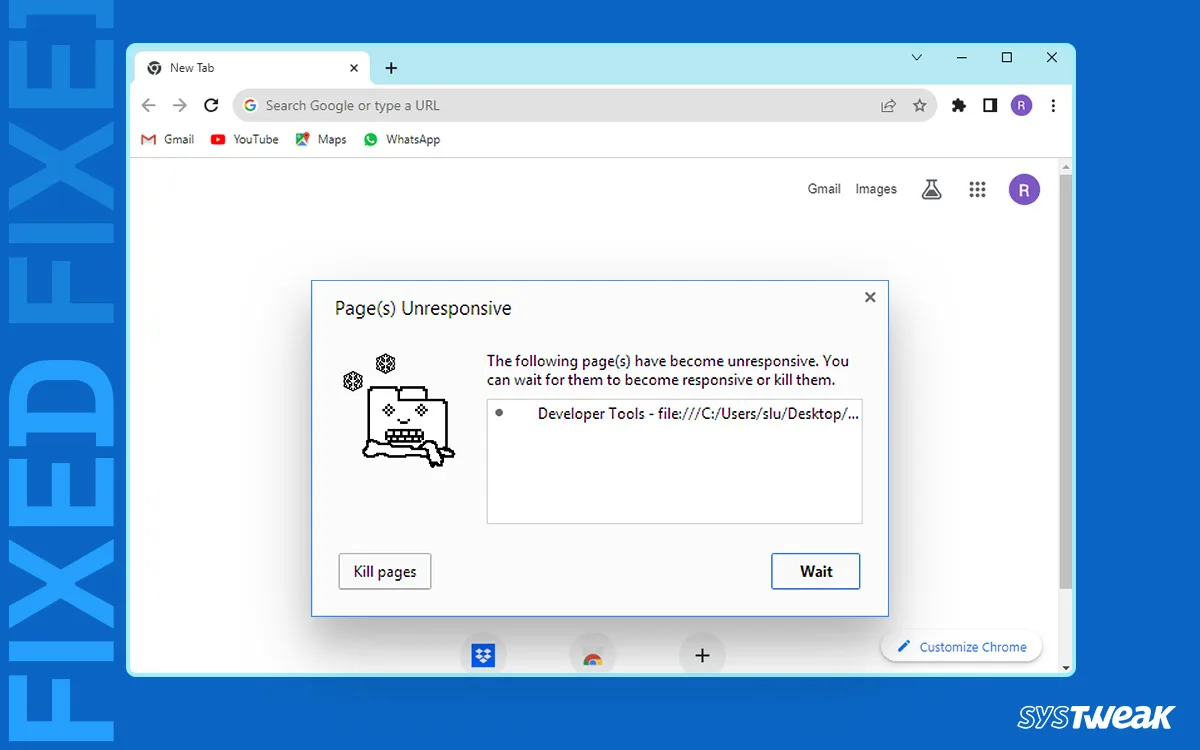

One of the most common browser errors that appears on almost all browsers is the Page Unresponsive error. Opening your browser with a web address to find the page not opening and encountering the Page Unresponsive errors can be frustrating. This error can appear due to an unknown network, an incorrect/broken URL, or browser errors. While low internet speed and broken URLs are out of your control, you can work on browser issues. In this post, let us look at the page’s unresponsive error. What is it, and why does it appear? We will also look at some of the ways you can use to fix the error on all browsers.
Page Unresponsive Error in Browsers: Definition & Causes
You might have experienced that some websites take a longer load time compared to others. Well, when the page becomes unresponsive, it keeps loading but does not completely open.
This page isn’t responding, which is one of the most common prompts that appear when a page becomes unresponsive. Different browsers show different prompts related to their inability to open the requested website. Some of the main reasons behind this error include.
- Many Tabs are open at the same time.
- Faulty browser extensions are creating conflicts.
- Insufficient RAM or High CPU Usage.
- Corrupted Browser Cache or Cookies.
- Outdated Browser or Software
Prerequisites Before Troubleshooting
Before we begin troubleshooting, there are a few prerequisites that we can follow to resolve our issue.
Wait
The first suggestion is to click on the Wait button and patiently wait for a couple of minutes. If it is a temporary glitch within your internet connection or the server of the website, it will be resolved automatically. As there is nothing you can do about it, we suggest that you wait.
Exit Page
The next option is to press the Exit Page button to close the unresponsive page. You can reopen the page and check if the issue still exists or was some sort of glitch.
Close Unnecessary Tabs
As a quick fix, you can try to close all the extra tabs open in the browser so all the resources are allocated to the unresponsive page that you wish to open.
Check CPU and Memory Usage
If the Exit page does not work or the browser becomes unresponsive, then you can press Ctrl + Shift + Esc to open the Task Manager and close the programs that are consuming your memory and system resources.
End Task Using Task Manager
If nothing happens after closing resource-hogging programs and your browser has become totally unresponsive, then you can end the browser task using the Task Manager. Just press Ctrl + Shift + Esc to open the Task Manager, locate and right-click on the browser task, and choose End Task. This will close the browser with all the tabs.
Check Internet Connection & Powerboot Modem
Another step you can take is to check if your internet connection is working properly or not on a different device. You can also power boot your modem by turning it off for 60 seconds and then switching it back on.
Restart PC
The Final step you can take is to restart the PC to clear out any RAM glitches or congestion in the memory. This will fix most issues, and you can browse your webpage again.
Ways to Fix Page Unresponsive Error on All Browsers
After you have completed the the Prerequisite steps, you need to follow the advanced troubleshooting steps if the issue persists. We have explained the steps for four commonly used browsers, namely, Google Chrome, Mozilla Firefox, Microsoft Edge, and Opera.
Browser Specific Troubleshooting
Method 1: Update Browser
Chrome
|
Edge
|
Firefox
|
Opera
|
Method 2: Clear Chrome Browser Cache
Chrome
|
Edge
|
Firefox
|
Opera
|
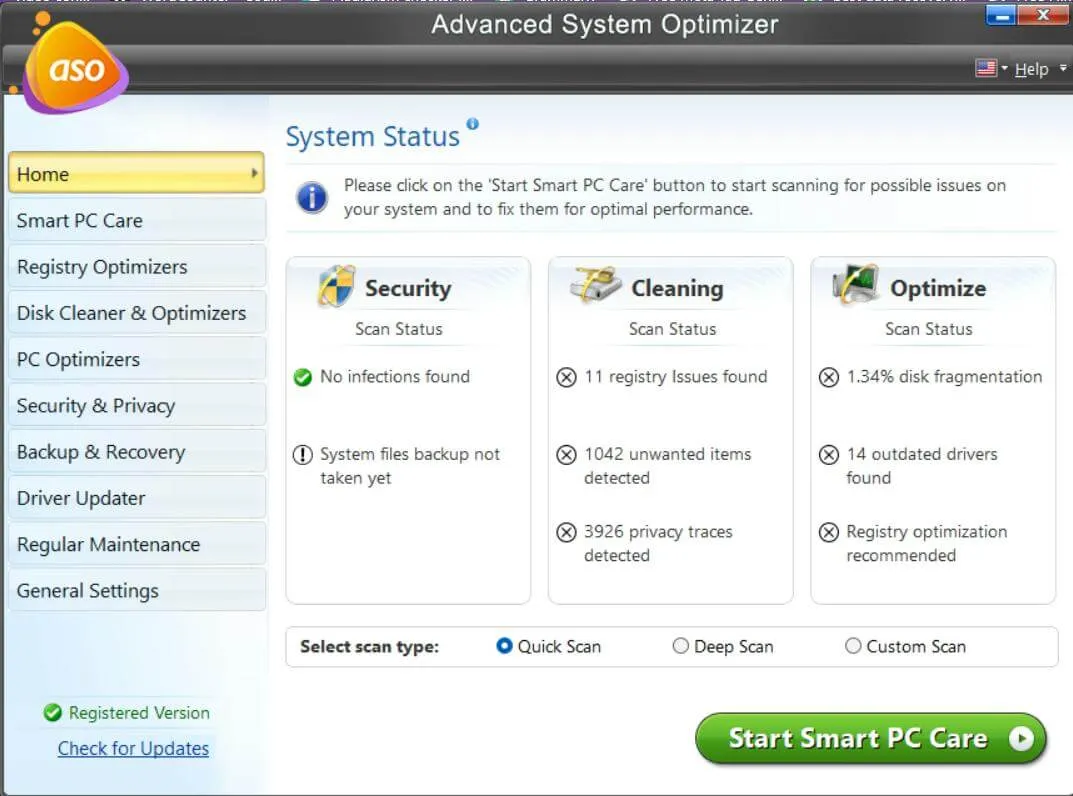
Editor’s Tip: Clear Junk and Temporary Files from Your PCSimilar to how cookies and cache can cause problems while browsing the internet, accumulated junk and temporary and unwanted files on your PC can hinder its performance and prevent it from running optimally. To keep your computer in top shape and ensure peak performance, consider using Advanced System Optimizer—a comprehensive PC optimization tool. Here’s what you need to do: Step 1: Download Advanced System Optimizer From the link provided below. Step 2: Open the software and click the Start Smart PC Care button.
Step 3: Wait for the scan to complete and find issues on your system.
Step 5: Sit back and relax, and the Advanced System Optimizer will optimize your PC. |


Method 3: Disable Extensions
Chrome
|
Edge
|
Firefox
|
Opera
|
Method 4: Reset Browser
Chrome
|
Edge
|
Firefox
|
Opera
|
Method 5: Disable Hardware Acceleration
Chrome
|
Edge
|
Firefox
|
Opera
Click the Opera menu icon in the top-left corner and choose Settings. Scroll down and click Advanced to expand more options until the System section. Find “Use hardware acceleration when available” and turn the toggle OFF. |
Method 6: Reset the Browser Settings
Chrome
|
Edge
|
Firefox
|
Opera
|
Windows Specific Troubleshooting
If the browser-based troubleshooting methods do not work, then we can try a few Windows OS based troubleshooting steps.
Method 1: Uninstall & Reinstall The Browser
After all the settings of the browser have been changed as per the instructions listed above, the final step is to uninstall and reinstall the browser. Here are the steps.
Note : Before you uninstall your favourite browser, make sure that you have an alternate browser installed to download the latest setup file of your default browser.
1. Press the Windows key and type “Add remove programs.”

2. A new window will open where all the installed apps will be listed. Use the search bar on the top to locate your browser.
3. Click on the three dots next to your browser and choose Uninstall.
4. Follow the onscreen instructions to uninstall the browser app from your computer.
5. Restart the computer and download/install your favorite browser.
Method 2: Use An Alternate browser.
If reinstalling the browser does not work, then we suggest you try to use an alternate browser. We recommend using Firefox as the next best alternative to Chromium-based browsers like Chrome, Edge, and Opera.
Method 3: Update Graphics Drivers
There have been reports where an outdated graphics driver can cause conflicts with browser rendering. Experts suggest keeping your GPU driver updated at all times to improve stability and performance. This can be done in three ways.
1. OEM Website – You can download and install the latest graphics drivers from the OEM websites. Remember to enter the correct model number to get the appropriate drivers for your PC, download them, and install them.
2. Device Manager – An inbuilt tool on Windows OS that helps users to download and update drivers from the Microsoft servers. The chances of finding the most updated drivers are low, as Microsoft technicians take time to verify OEM drivers before uploading them to their servers.
3. Advanced Driver Updater – A third-party tool that scans your PC, identifies the driver anomalies, locates the updated drivers, downloads and installs them with a few mouse clicks. Highly recommended tool for keeping all your PC drivers updated and expect optimal system performance.
Conclusion: Have You Fixed The Page Unresponsive Error on All Browsers?
We hope that the above methods will help you fix all the browser issues, including the “Page Unresponsive Error” on Windows PC. Please try out the prerequisites first and then initiate the troubleshooting steps. You must check if the issue has been resolved after the successful completion of each method. This way, you can stop troubleshooting and ignore the remaining methods after the issue resolves to save time and effort.
Frequently Asked Questions
Recommended : Google Chrome Vs Mozilla Firefox: Which Browser is Better